
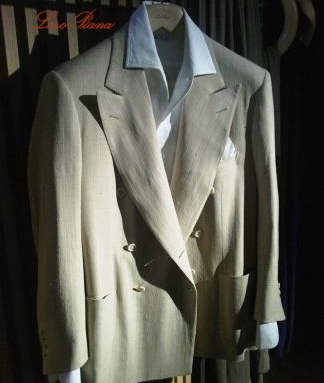
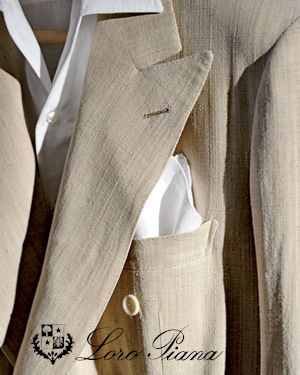
When Pier Luigi Loro Piana – a member of the family that fully owned Loro Piana, the Italian luxury clothing brand, until 2013 – first encountered lotus fabric in 2009 his first instinct was to have his company make him a sport coat out of the fabric. We feel him.
When a friend from Japan handed Pier Luigi Loro Piana a swath of beige fabric last year, the textile baron had a hard time believing the story he was told: that the thread had been hand-spun from the fibers of the lotus plant.
The fabric looked like a blend of linen and raw silk. It was slubbed and soft to the touch. With the nonchalance of a man who has his own clothing company, Mr. Loro Piana had the fabric made into a jacket. “I wore it all fall,” he says.
He then produced a lotus jacket for customers, for $5600 USD in 2010 (~$8,600 in 2026). This product is not currently listed on their site; perhaps the civil war in Burma has interrupted his supply of lotus fabric.
Atelier Padonma’s sport coat plans
A sport coat is definitely on Atelier Padonma’s short list for its open source collection. Yet such is not first-up as we want to reduce risk by starting simpler than with a sport coat. To wit, we are starting in-house with simpler, less constructed garments like wrap skirts (longyis, sarongs) and fisherman trousers. Nonetheless, we have found existence proofs that sport coats can be made of lotus fabric.
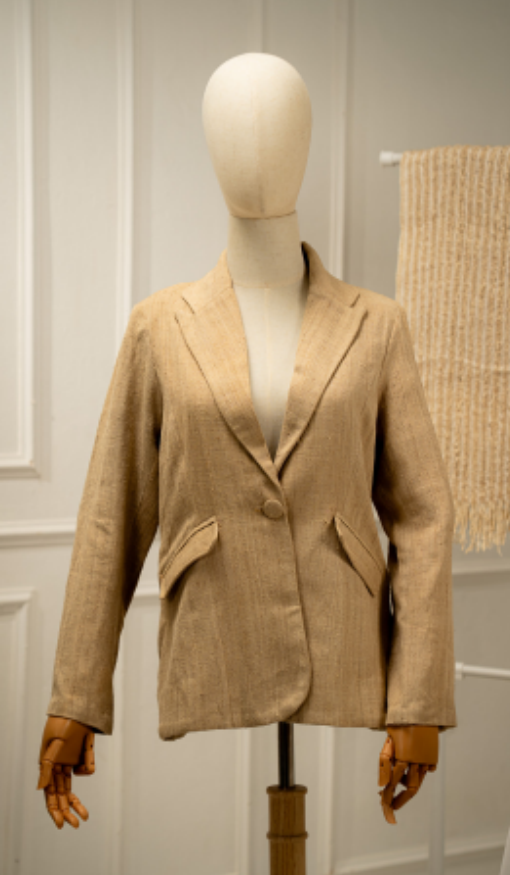
We have also stumbled upon the Hope Company’s lotus jacket for women.
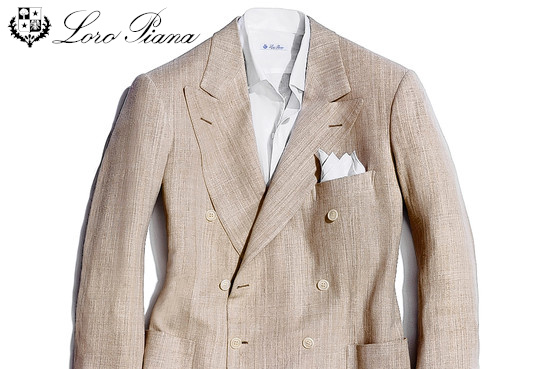
Clearly, Loro Piana has sourced excellent lotus fabric (from Inle Lake, where lotus fiber was first used for textiles) which is still slubby by nature, and has excellent tailoring talent on hand in their atelier.
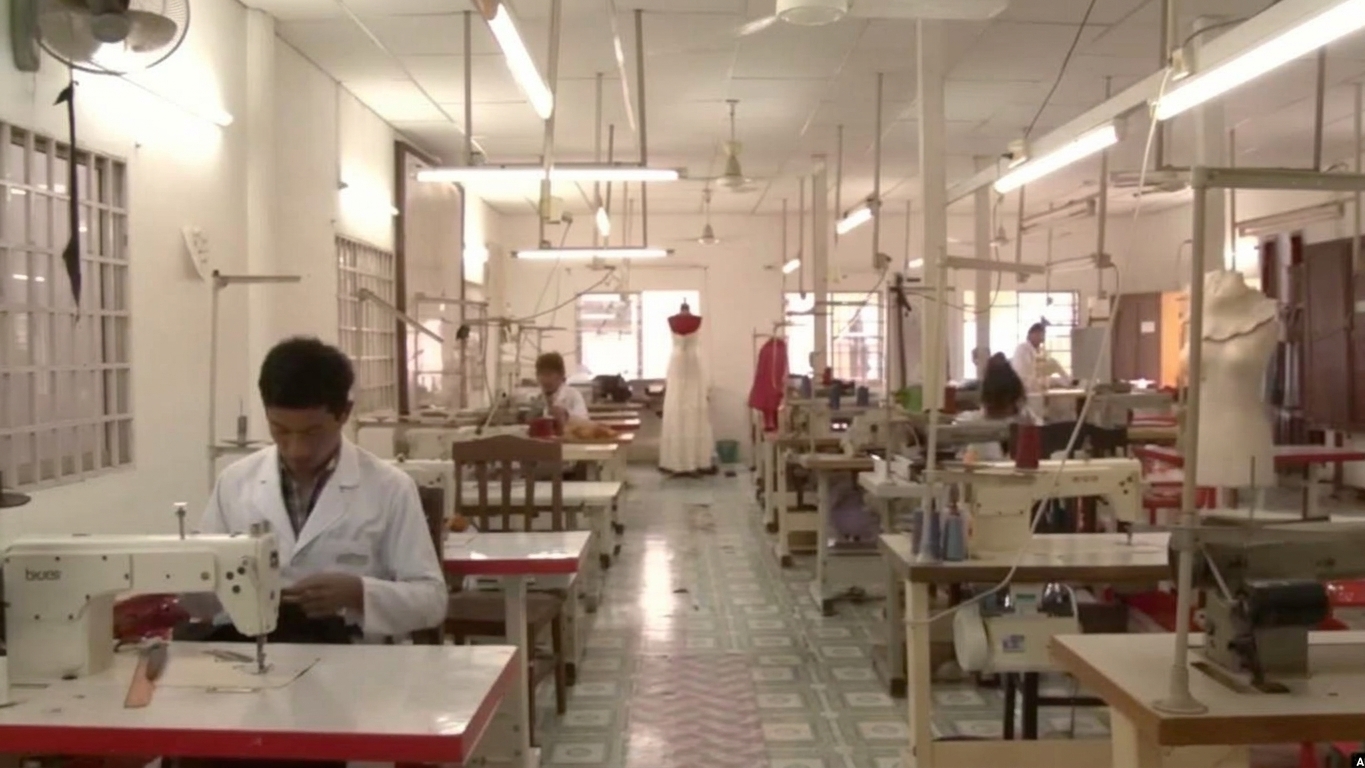
Further, we have identified an experienced lotus manufacturer, Samatoa of Cambodia, whose production model is fully integrated, so quality is internally controlled from farming lotus and harvesting stalks for yarn, through to finished garment, including custom tailoring. We have not yet confirmed that they have experience cutting suit jackets but from what we have seen they have the technical skill to do that and even more complicated work. Their dresses were reportedly selling in boutiques in fifteen countries for $3000 to $4000 in 2015.
Finally, we have a specific open source design pattern, the Jaeger, that we are going to work off of to make prototypes. (Providing the various lotus artisans with an open source catalog of Atelier Padonda’s collection is one of the goals of the Padonma Network.)

Note the following example of the Jaeger design is made of linen. Lotus has a similar color but unlike linen it does not wrinkle easily.

Next step: find a guinea pig
Next step would be to find someone who wants to get involved with the Padonma project as a guinea pig customer. Atelier Padonma would collaborate with Samatoa to specify the work order based on the open source design pattern, including a unique QR ID band, charging nothing to either the customer nor Samatoa.
Note: Samatoa has not yet been directly contacted so maybe this plan is stillborn. So, Atelier Padonma has some pitching to do before we can proceed with them. There is no way they have heard of the Padonma Network yet.
The guinea pig would go to their local tailor to get their measurements taken. They would directly pay Samatoa (beware their lead time). The sport coat would be manufactured in Cambodia with inlays (bits of extra fabric so that a garment can be let out later). The sport coat would Fed Ex’d to the tailor who would perform the final fittings.
The Padonma Network is intentionally designed to directly connect lotus artisans with customers (individuals and fashion houses) without any intermediaries wetting their beaks. Atelier Padonma is simply the midwife of the decentralized Network.
The guinea pig:
- Is risking their own money, but avoiding intermediary mark-up
- Has to find a tailor willing to collaborate in this fashion
- Gets to be involved with a cool project (the QR ID band is a good conversation piece, which when scanned leads to the individual garment’s page on the Padonma Network)
- Hopefully gets a beautiful sport coat of timeless style made of the most luxurious fabric
What would that cost? No idea, but if Loro Piana was selling 100% lotus sport coats for $5,600 in 2010 and Samatoa dresses were selling for three or four thousand in the same time period… take out the middlemen and the ludicrous pricing of haute couture… Possibly a lot less as they were advertising off-the-rack ladies lotus jackets for $390 [sic] in 2025.

Details details
We have a clear idea of the styling of the sport coat we wish to produce. The garment will have classic timeless style with strong historical roots yet nothing archival nor costumey.
Include
- Color: natural only to start
- Later: indigo dyed blue blazer (referencing the time of the British in Burma). Have some tasteful solid brass buttons made with lotus designs which could be easily shipped around to lotus tailors. (The Burmese has a long history of brassworks.)
- Functional cuff with real buttons and buttonholes on the OG surgeon’s cuff
- English style double vents in the rear, not American single vent
- Buttons
- For the natural colored coat, button color will match the fabric, see Loro Piana’s example
- Front buttons: three rolled to two
- Functional lapel
Exclude
- Not double breasted
- No epaulettes
- No peaked lapels, too archival or if going modern can come off as pretentious. Also very on and off in terms of being au courant. While notched is more timeless.
- No chest patch pockets, maybe flap pockets at waist, maybe jetted
- Sure bush jacket roots for that structure but not retro-styled to look like a costume piece
- No visible throat latch: Allan Flussers Dressing The Man
- No machined pick stitching, but maybe it truly handstitched