Inbox
Various notes that need to be folded in …
Weaving QR Codes is very doable
QR pattern complexity is negligable for a skilled weaver and even non-weavers can pick it up. Padonma Network has proven it, the hard way for a self-educated noob.
The the skill to weave the complexity of many a weaving pattern is far beyond what is required to weave a QR code, although granted the pattern may seem random to the untrained eye. This is yet another reason why we went with rMQR codes over standard square QR codes: it is easier to eye-jump between QR pattern design and loom when the Code is narrow as with R7, R9, and some folks like R11 because greater height makes for shorter weave length.
Images
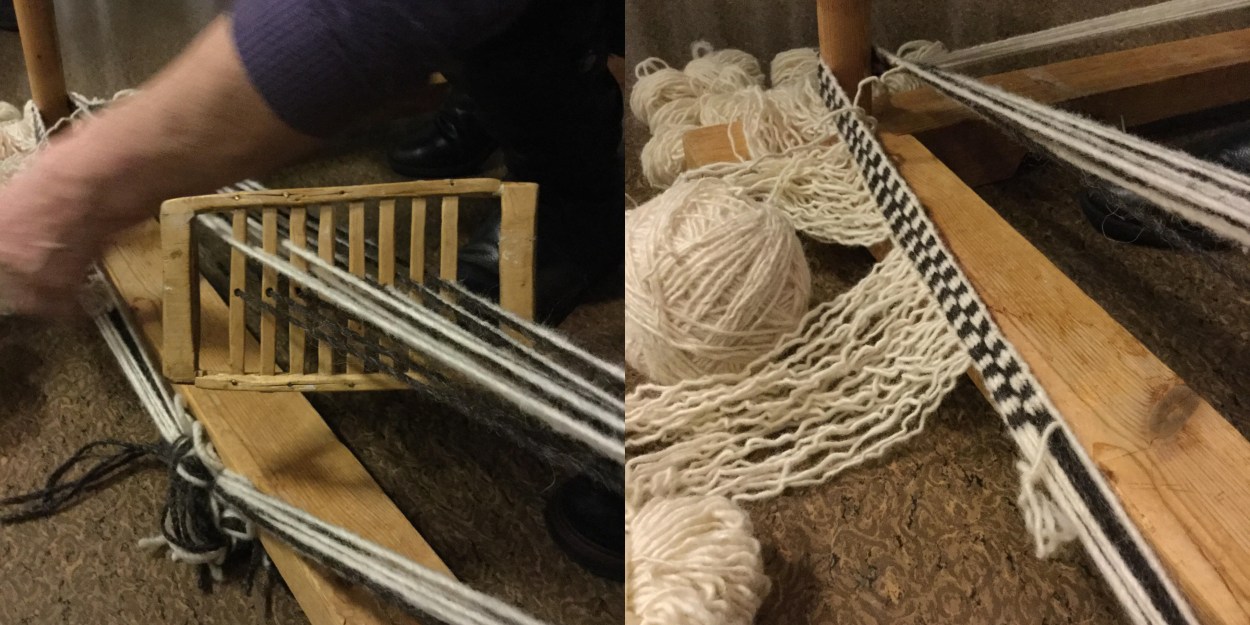
QR-like weaving example from backstrapweaving.com:
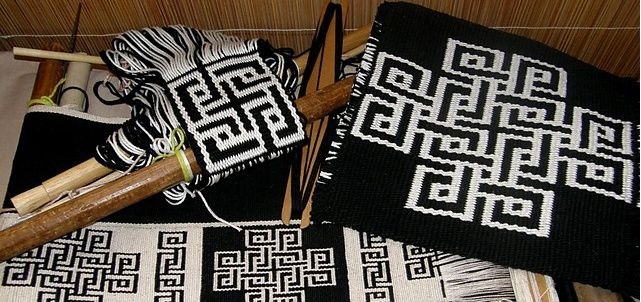
Intro
We need to test this idea and actually weave some rMQR codes; see what can actually be scanned. For a primer on backstrap rigid heddle weaving, see Bandweaving: an ancient minimalist weaving technology.
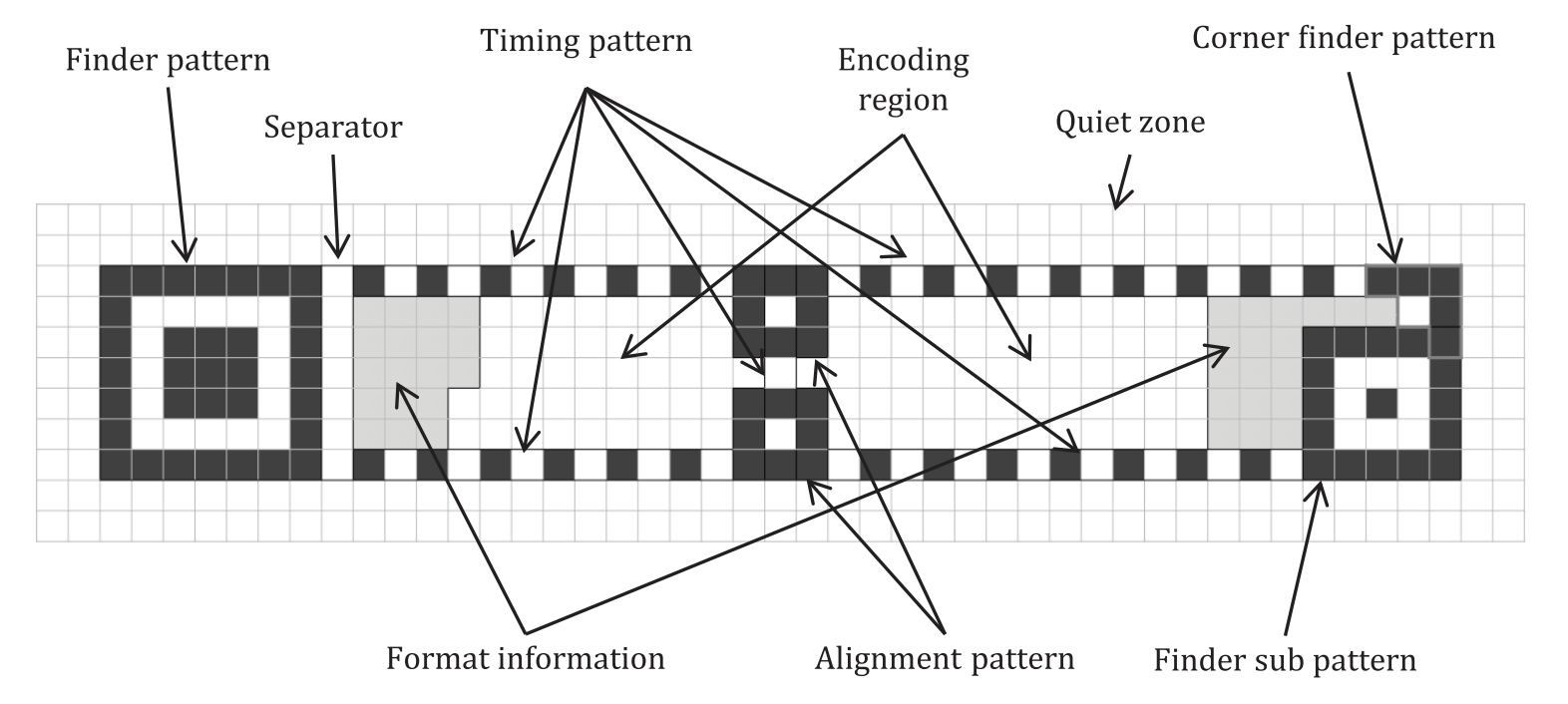
The rMQR spec defines some terminology:
A dark module is nominally a binary one and a light module is nominally a binary zero.
Each rMQR symbol shall be constructed of nominally square modules set out in a rectangular array.
In other words, the “pixels” in rMQR codes are called modules. The black ones are 1s. We want to weave modules that are nominally square enough to make a QR reader happy. The woven bands should be rectangular – consistent in width and straight enough.
To imagine what a handwoven rMQR band would look like, observe this weaver. The pattern he is weaving is rather similar to what a rMQR band would look like (a rMQR would just be black and white): Patterned band ~24 warps, backstrap, rigid heddle - YouTube:
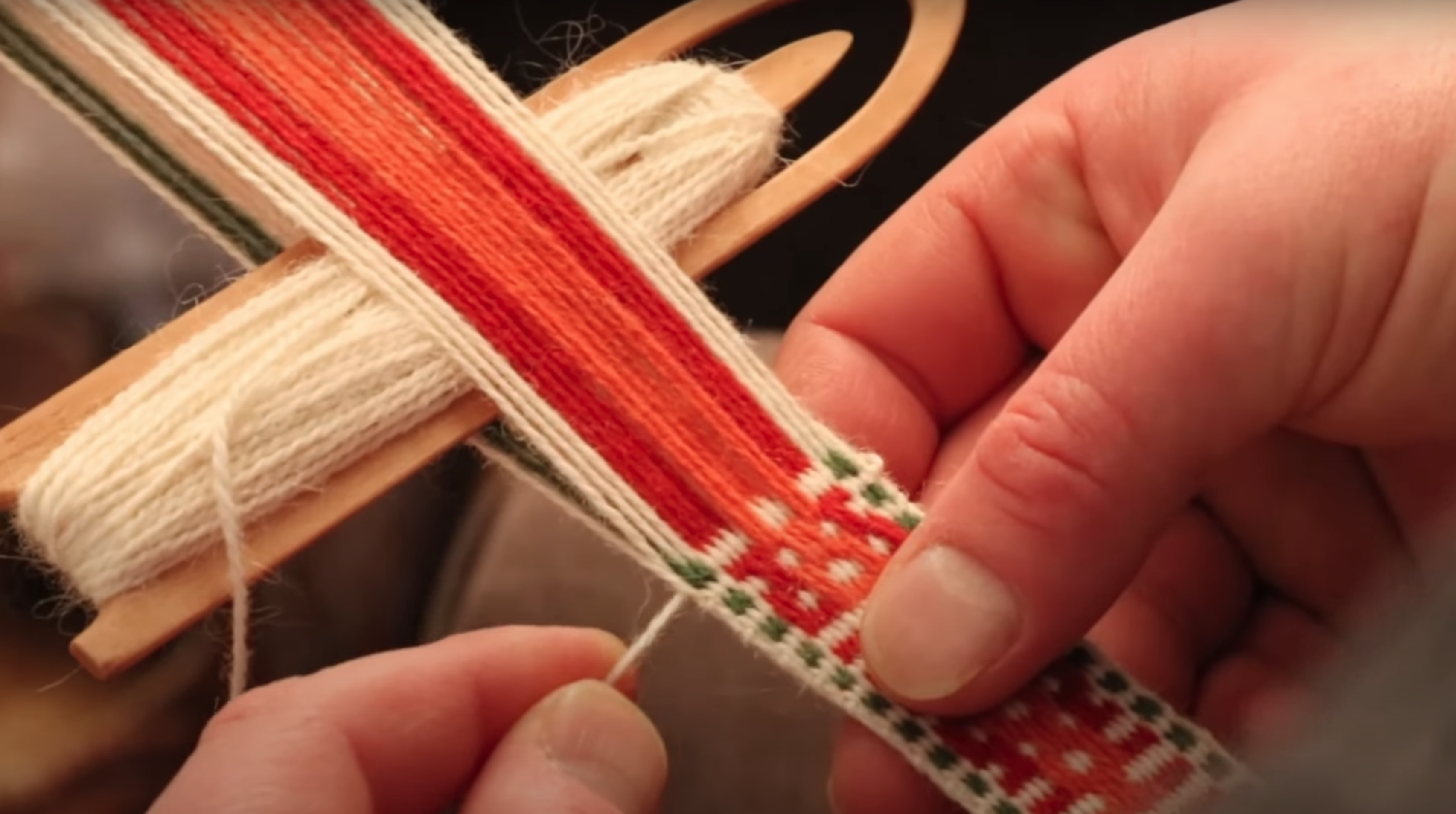
Weaving an R7-sized rMQR would be be simpler than as demonstrated in Pattern Weaving with Pick Up Stick Rigid Heddle Loom. As illustrated, the pick-up stick is how the weaver sets or resets a module in the rMQR.
The only tool needed to handweave the rMQR band is a simple small rigid heddle with 7 slot, and 8 holes. This is a very simple form of backstrap weaving. To weave an R7-sized rMQR code, the loom set-up would be as simple as in this video, Kedma Backstrap Loom, except the colors would be diferent: for weaving the rMQR codes the holes get white background threads and the slots get black pattern threads.
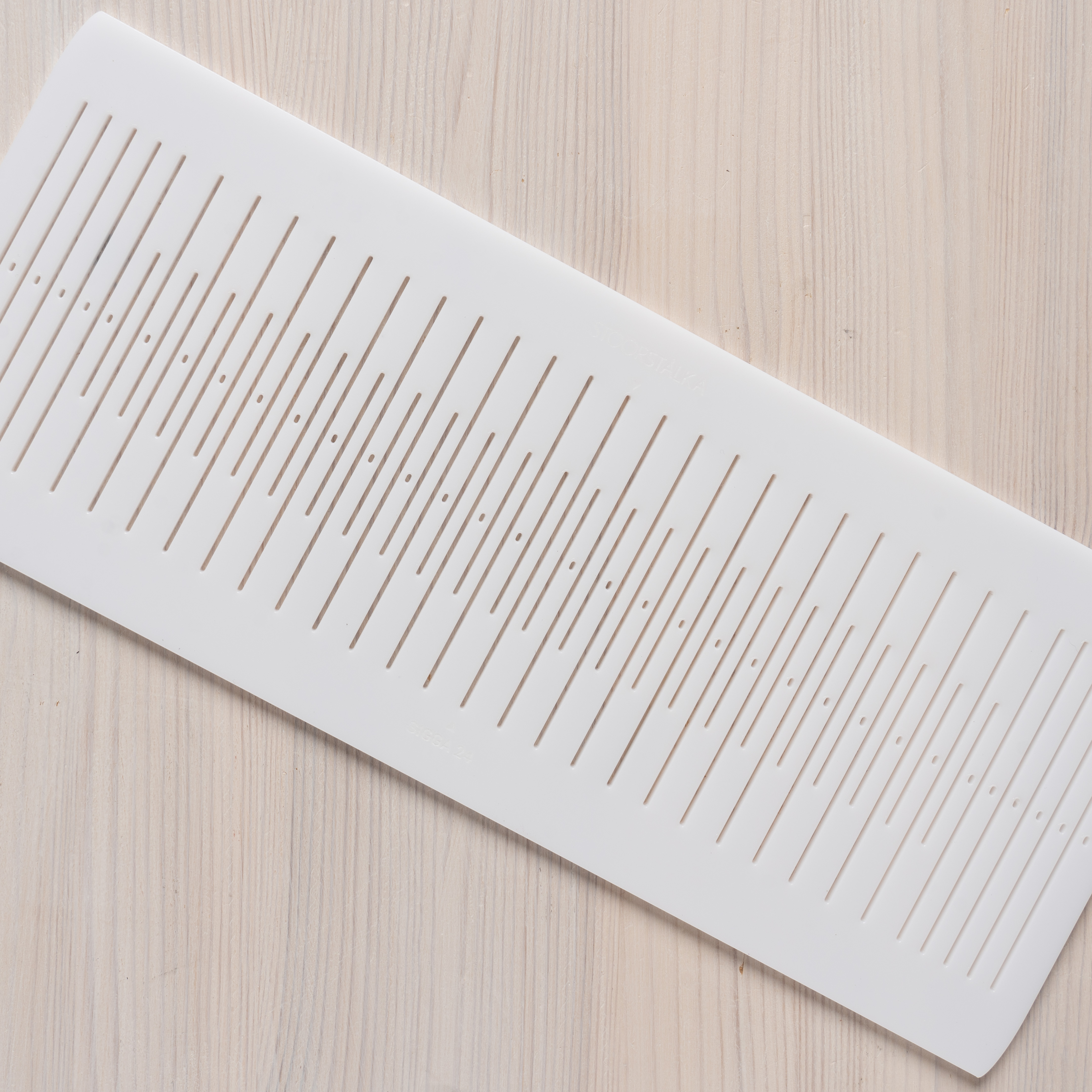
Note: the rMQR spec calls for a two module wide margin “quiet zone” all around the active data modules, which makes it easier for QR reader software to isolate a QR code from the image background. So a R7 rMQR with quite margin would require a warp wide enough to handle 11 data modules, although the four modules of margin (two on each end) do not need patterning controls in the heddle, as they will be always white background. This is starting to sound like a rMQR-specilized rigid heddle design: a 21 (3X7) pattern thread pick-up heddle with extra holes and slots on both ends for quiet zone margin threads. Pattern threads grouped in threes, three adjacent pattern threads for each QR data module. The following $35 bandgrind heddle would suffice, even if each QR data module requires three pattern threads (3x7 = 21 < 24):
According to a backstrap rigid heddle article in Spin Off it sounds like the pattern (black) and background (white) thread should be in a ratio 2:1 in diameter, and that S versus Z twisting might help the software recongize the rMQR code (or just do not use tablet weaving):
For pick-up patterns like I used here to create a red and white patterned band, the pattern threads (red) need to be at least twice as large as the background threads (white).
An interesting thing I’ve learned by band sleuthing in museum collections is that Norwegian bands often have a different twist direction in pattern versus background threads. Here, my red, 2-ply threads have a S-ply twist, and my white charkha-spun cotton threads are 2-ply with an Z-ply twist.
In the end, if their phone can scan the rMQR code, they’ve done it correctly and their garment would exist on the blockchain as an NFT with that same rMQR serving as the NFT image (with more info buried in the code and the NFTs metadata). The rMQR spec was ISO certified in May of 2022. There are already many QR reading apps which can read rMQR codes (but not default Android as of 2023; need to install free reader app).
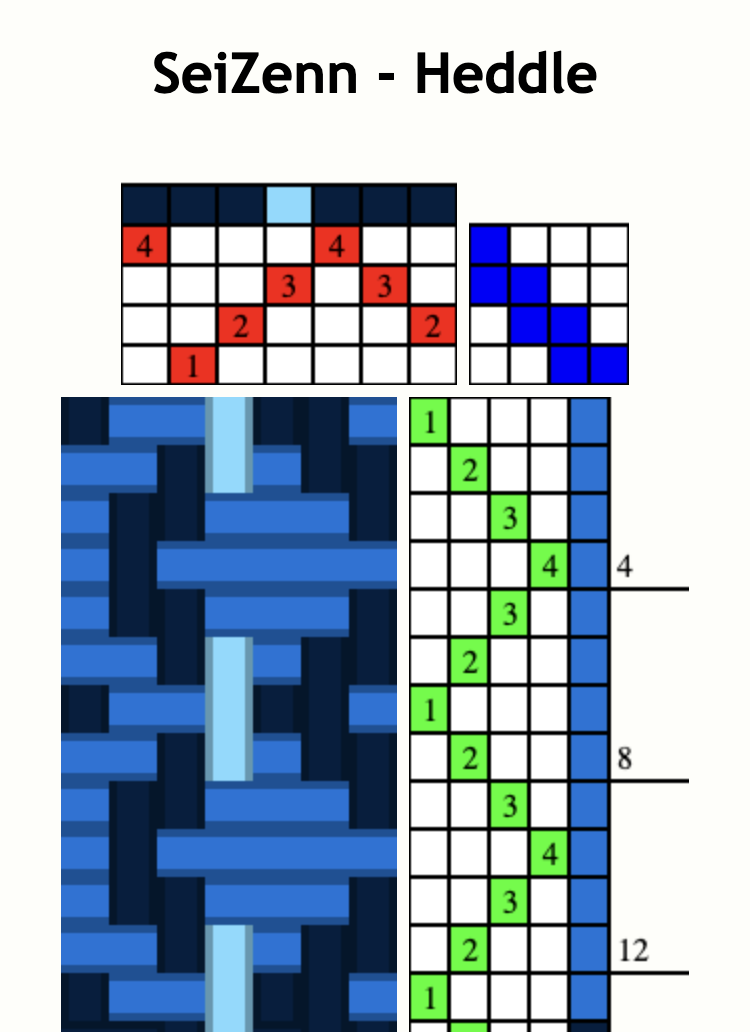
Bonus: imagine displaying the rMQR on the weaver’s phone as a weaving draft WYSIWYG assistant for rMQR weaving. Perhaps the phone could even be inserted into the loom while the pick-up stick is used. In order to create weaving drafts of rMQR, esxisting web apps could be used, such as Seizenn | loom pattern editor.
Existing loom pattern editing software can be used to layout rMQRs: Seizenn | loom pattern editor is a mobile app (packaged as a PWA). Such patterns could be shown on a phone, and the phone shoved into a small rigid heddle loom as a visual guide to the rMQR to be woven.
It may well be that a more complex type of rigid heddle called a “pattern heddle” may make the weaving easier. A pattern heddle, or pick-up heddle, has both short and long slots, which makes picking up only pattern threads easier (so faster rMQRs?). Notice that the heddle shown below has only long slots on both outer ends, which is how “two modules” of pure white selvedge would be woven, as called for in the rMQR spec:
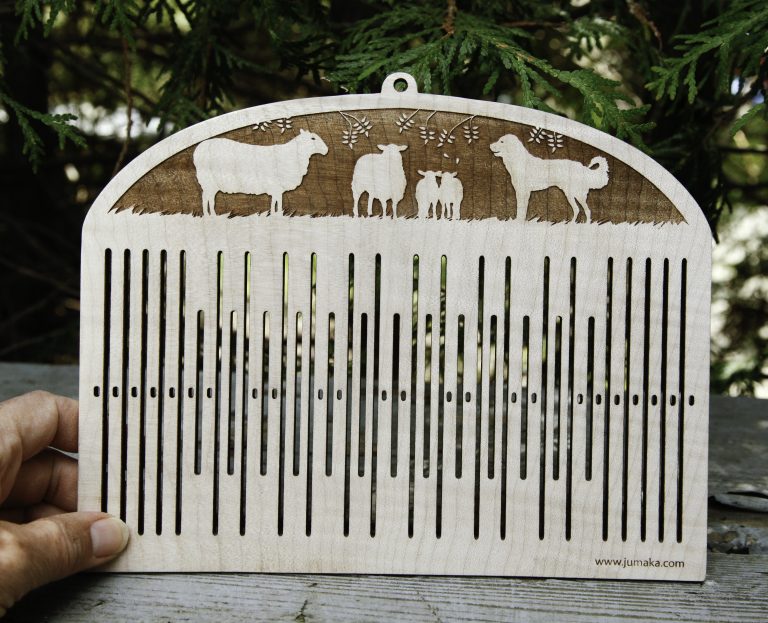
See, Bandweaving on Jumaka.com, for valuable heddle designs such as double holed and double slotted (DIY lazer cut out of wood), and pointed tip heddles which makes pick-ups of threads eaiser (for faster rMQR weaving).
And there may well be other pickup weave techniques the could adapted for high-speed rMQR codes weaving. For example, How to Weave Pickup on a Band Loom.
Tablet weaving might also be a quick process. For example, Double faced tablet weaving - YouTube. Tablet weaving by nature has a diagonal orientation to the warp threads. QR modules woven via tablet weaving might be harder for QR readers to recognise. Although in Tablet Weaving a QR code | BushcraftUK Community, there is a tablet woven QR that surprising does scan:
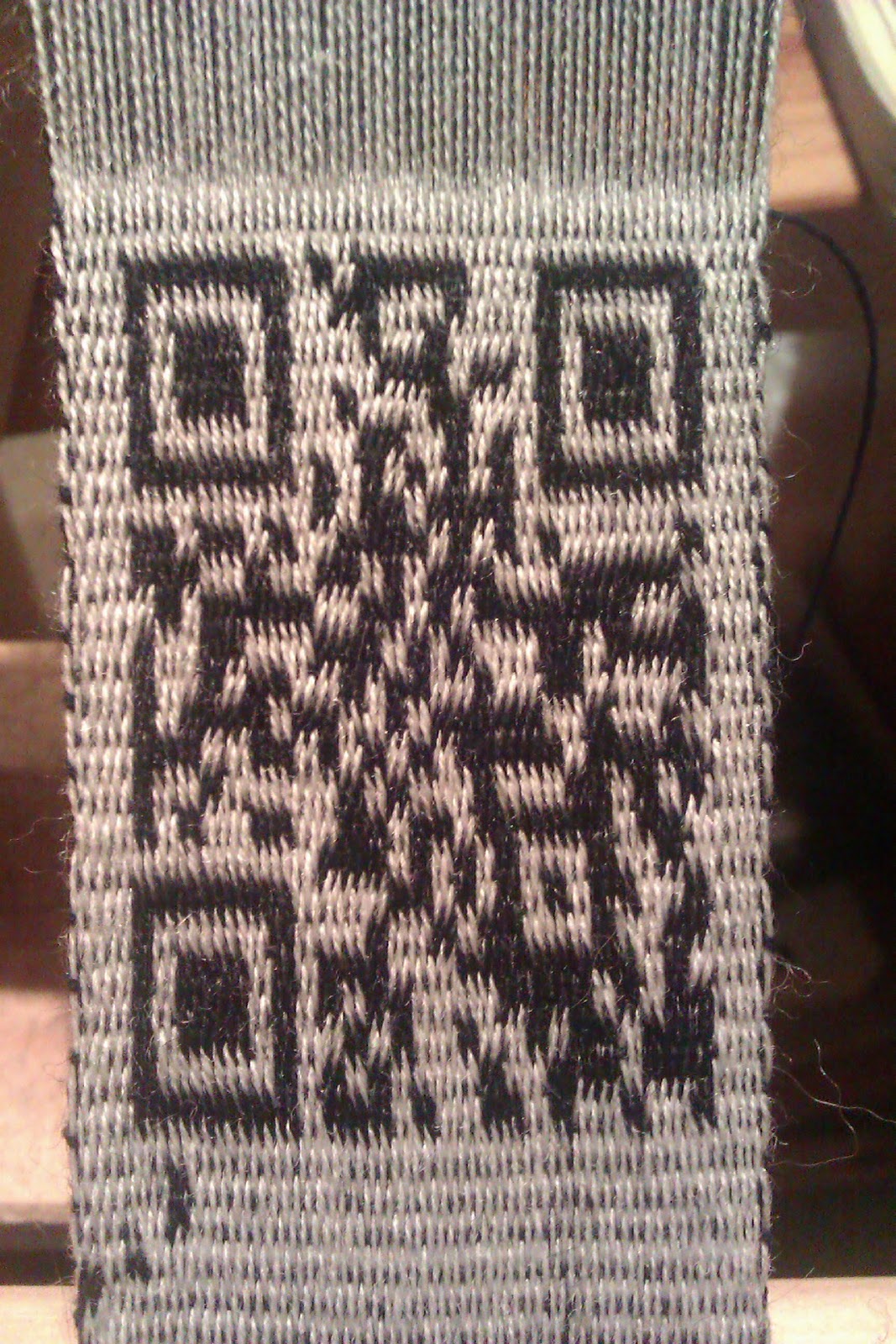
For the situation where the artisan already has a large loom and wishes to encorporate an rMQR into the garment but not as a tag, an rMWR codes could be added into the loom as a separate layer via a “supplemental warp” as illustrated in, Rigid Heddle loom - Weaving a Supplemental Warp - YouTube.